COME TASTE AND SEE THAT THE LORD IS GOOD

Palusami (Lu’au) – Samoan Coconut Cream Taro Leaves
A traditional Samoan dish made with coconut cream and taro leaves, gently adapted for the modern home kitchen. A gluten and dairy free samoan treat, Palusami is for the whole family.
RECIPESPACIFIC ISLAND & SAMOAN RECIPESCOCONUT CREAM DISHES (FA‘ALIFU & LU‘AU)
12/7/20252 min read
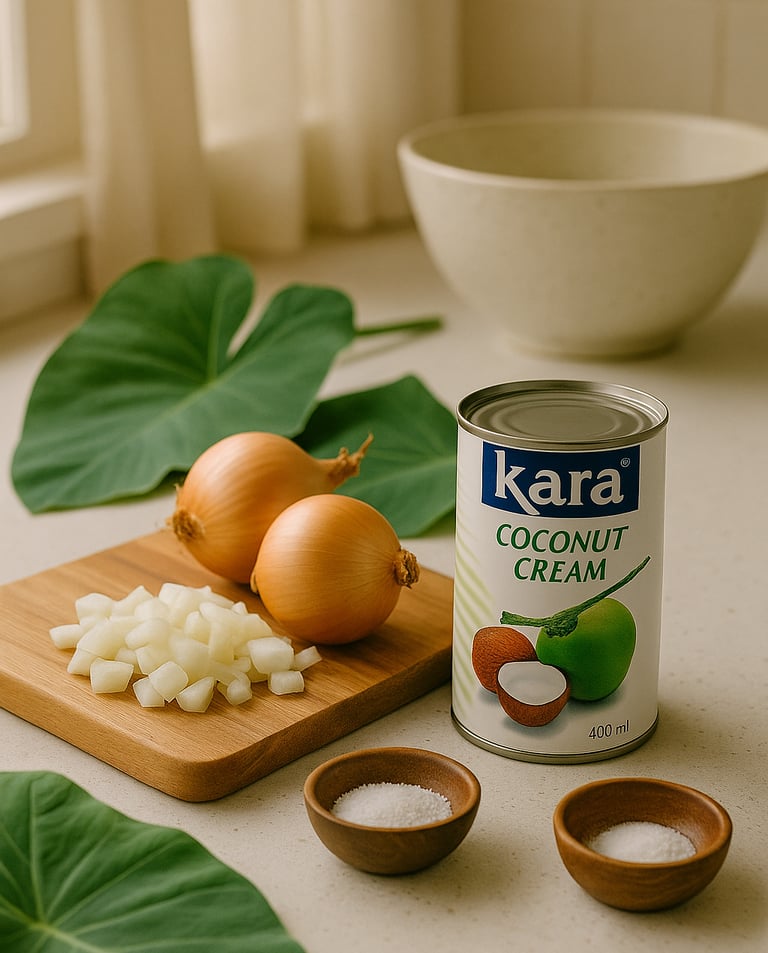
A Taste of Samoan Tradition
Palusami is one of the most recognised dishes in Samoan cooking, often prepared for Sunday lunch, family gatherings, weddings, and church celebrations. Made with coconut cream and taro leaves, it reflects the simplicity and care found in island home cooking.
Growing up, many families commonly referred to this dish as Lu’au. While the names may differ depending on the setting, the heart of the dish remains the same — a meal prepared slowly, meant to be shared, and deeply connected to culture and family.
This version is adapted for everyday kitchens while honouring the spirit of traditional preparation.
A Cultural Note
Growing up, this dish was commonly called Lu’au in many Samoan households. Palusami is the upu fa‘aaloalo — the respectful term often used in cultural settings, particularly when speaking with elders or when food is formally presented (folafola mea‘ai).
This recipe is inspired by Samoan home cooking as shared through family and community. Names, measurements, and methods may vary between households — this version honours those traditions while adapting the process for modern kitchens.
Ingredients
This dish uses simple ingredients commonly found in Samoan cooking.
20–24 taro leaves (lu‘au), stems removed
2 cups thick coconut cream
1 small onion, finely chopped (optional but commonly used)
Salt, to taste
Aluminium foil (or banana leaves if available)
Optional family variations:
Corned beef
Salted fish
Prawns
Instructions
Prepare the leaves
Rinse taro leaves thoroughly and remove all thick stems. Stack leaves neatly and set aside.Mix the coconut filling
In a bowl, gently combine coconut cream, onion, and salt.Assembling the Lu’au (Fa‘aofu)
In Samoan households, assembling the lu‘au is often called fa‘aofu, meaning to carefully secure and wrap the leaves so nothing leaks during cooking.It helps to cut and prepare the foil first, then assemble the lu‘au directly on top of the foil resting on the bench. Spoon coconut mixture into the centre of stacked leaves, then fold and wrap securely.
Cook
Oven method: Place wrapped parcels into a covered baking dish. Bake at 180°C (350°F) for 60–75 minutes.
Steaming method: Steam parcels for about 60 minutes until leaves are tender and coconut cream has thickened.
Rest & serve
Allow palusami to rest briefly before serving warm.
Helpful Tips
In Samoa, only the young taro leaves that grow from the centre are traditionally called lu‘au, as they are softer and ideal for cooking. The act of collecting these leaves is known as ‘oto.
Outside of Samoa, larger taro leaves are often used due to availability. Thicker leaves require longer cooking times.
Traditionally, banana leaves (lau fa‘i) or breadfruit leaves (lau ‘ulu) were used. Today, foil is commonly used for accessibility and affordability.
Taro leaves must be fully cooked to prevent itchiness.
Why This Recipe Works
Minimal ingredients with deep cultural meaning
Naturally vegetarian and budget-friendly
Adaptable for modern kitchens
Designed for sharing and family meals
What to Serve with Palusami
Palusami is commonly enjoyed with:
Taro or breadfruit
Steamed rice
Roast chicken or fish
A stovetop variation of this dish, known as Lu‘au Ulo, is also enjoyed in many homes and will be shared separately.
Explore More Comforting Family Meals
If you loved this recipe, you may also enjoy:
Prep: 15 mins | Cook: 60–90 mins | Total Time: 1 hr 15 mins – 1 hr 45 mins | Serves: 4–6
Best For: Family meals, cultural gatherings, shared tables
© 2025. All rights reserved.
Alofa Tunoa shares budget-friendly recipes, family meals, one-pan dinners, and Pacific Island inspired food rooted in Samoan culture and faith-filled home cooking.