COME TASTE AND SEE THAT THE LORD IS GOOD

Fa'alifu Talo (Taro in Coconut Cream)
Traditional Samoan Staple — Creamy, Comforting, and Essential. The ultimate side dish for all Samoan cuisines, faalifu taro can be enjoyed together with other foods or simply on its own, the choice is yours.
RECIPESPACIFIC ISLAND & SAMOAN RECIPESCOCONUT CREAM DISHES (FA‘ALIFU & LU‘AU)
12/9/20252 min read
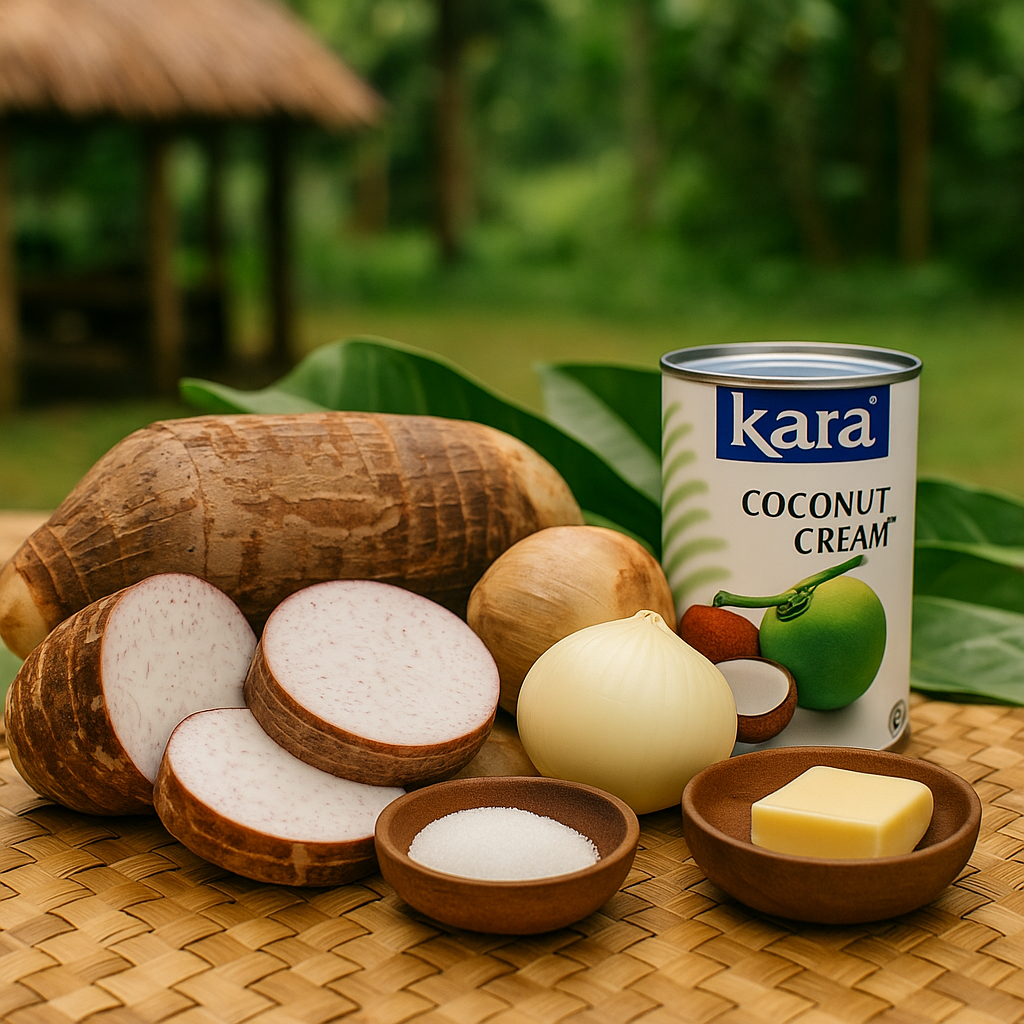
Prep: 10 mins | Cook: 20–30 mins | Total: 30–40 mins | Serves: 4–6
Best For: Family meals, to’ona’i, everyday Samoan home cooking
Introduction
Fa’alifu talo is one of the simplest and most comforting dishes in Samoan cuisine — tender taro simmered gently with coconut cream to create a creamy, nourishing side dish. Every family has their preferred consistency: some love it thick and lololo, others prefer it runnier, and most enjoy something right in the middle.
And in true Samoan fashion, a generous serving of coconut cream only makes it better.
Fa’alifu talo can be made with either coconut cream or coconut milk. Coconut cream gives a rich, traditional finish, while coconut milk is lighter and can be thickened easily. Either way, this dish brings the taste of Samoa straight to the table.
Gathering the Ingredients
1 large taro (talo), peeled and chopped into even pieces
1 can (400ml) coconut cream — or coconut milk (see note below)
½ small onion, finely chopped (optional but commonly used)
½ teaspoon salt, or to taste
Water (optional, only to thin very thick coconut cream)
If using coconut milk:
Mix 100ml water + 1 tablespoon cornflour to create a thickener
ORSimmer slightly longer to thicken naturally (careful not to burn the taro)
Note: Canned coconut creams vary in thickness. KARA coconut cream is thicker and may need a splash of water to loosen it. Coconut milk is thinner but works beautifully with the thickening method above.
Making Fa’alifu Talo
Prepare the taro
Peel the taro carefully and chop into medium, even pieces.
Rinse hands well after handling taro.
Boil the taro
Place the taro into a pot and cover with water.
Add a pinch of salt.
Optional (very common): Add 1 tablespoon of butter or oil to help prevent the starchy water from boiling over.
Boil for 20–30 minutes or until tender when pierced with a fork.
Prepare the coconut mixture while the taro cooks
In a jug or bowl, combine coconut cream or coconut milk with salt.
Add the finely chopped onion directly into the mixture, if using.
If using coconut cream, loosen with a very small splash of water only if extremely thick.
If using coconut milk:
Stir in the 100ml water + 1 tbsp cornflour mixture to help thicken it later,
OR plan to simmer a little longer in Step 5 to thicken naturally.
Adjust to your preferred consistency: thick lololo, runnier, or in-between.
Drain and combine
When the taro is cooked, drain all the water.
Return the pot to low heat.
Immediately pour the coconut mixture over the taro.
Bring to a gentle boil
Let the coconut mixture and taro simmer together for 2–3 minutes, or slightly longer if thickening coconut milk.
Stir gently and watch closely to avoid burning the taro on the bottom of the pot.
Turn off the heat once it lightly bubbles and reaches your preferred thickness.
Serve
Serve warm with sapasui, pisupo, lu’au, meats, or enjoy on its own.
Helpful Tips
Add butter or oil while boiling to stop the taro water from overflowing — a classic Samoan trick.
Coconut cream gives the richest, most traditional flavour.
Coconut milk works well too: use cornflour to thicken, or simmer longer (but be careful not to burn the taro!).
Onion adds beautiful flavour but is optional.
Taro absorbs liquid over time — add more coconut mixture or a splash of water when reheating.
Even-sized taro pieces cook best and hold their shape.
Why This Recipe Works
Authentic and simple
Flexible for any household preference
Clear instructions for beginners
Deliciously creamy and nourishing
Completes almost any Samoan meal
Passed down through generations
Explore More Pacific Recipes
© 2025. All rights reserved.
Alofa Tunoa shares budget-friendly recipes, family meals, one-pan dinners, and Pacific Island inspired food rooted in Samoan culture and faith-filled home cooking.